Custom Home Design: Creating Your Dream Space
- Mark Tanney

- Aug 16
- 6 min read
Custom home design is a meticulous process that translates a personal vision into a functional, aesthetic living space. It requires a clear understanding of your needs, a collaborative partnership with design professionals, and careful consideration of your environment. This guide outlines the essential steps and factors involved in creating a home tailored to your lifestyle.
Table of Contents
Understanding the Custom Home Design Process
The journey of creating a custom home follows a structured path from concept to completion. Each stage is critical for ensuring the final result aligns with your initial vision. The process is fundamentally collaborative, requiring open communication between you and your design team to achieve a successful outcome.
Key phases of the design journey include:
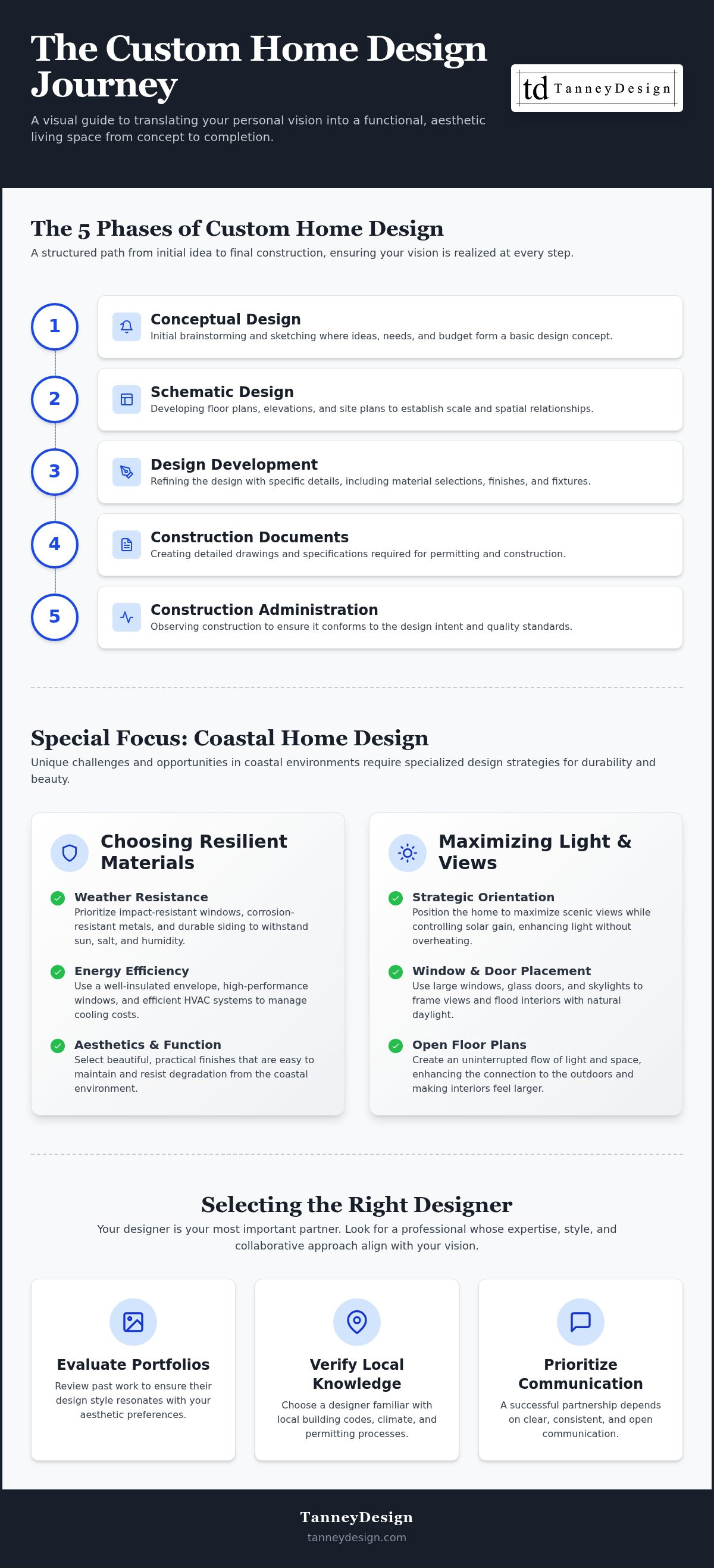
Conceptual Design: Initial brainstorming and sketching where your ideas, needs, and budget are translated into a basic design concept.
Schematic Design: Development of floor plans, elevations, and site plans to establish the home's scale and relationship to its surroundings.
Design Development: Refining the design with specific details, including material selections, finishes, and fixtures.
Construction Documents: Creation of the detailed drawings and specifications required for permitting and construction.
Construction Administration: The designer's role in observing construction to ensure it conforms to the design intent.
Avoiding common pitfalls, such as an undefined budget or unclear goals, is crucial. A well-defined plan from the outset provides a clear roadmap for the entire project.
Defining Your Vision
A successful custom home begins with a well-defined vision. This foundational step ensures that your living space is a true reflection of your lifestyle and aesthetic preferences. Before engaging with professionals, invest time in clarifying your objectives.
Assess Lifestyle Needs: Consider your daily routines, family dynamics, and future needs. How do you entertain? Do you work from home? These details inform the home's layout and functionality.
Research Design Styles: Explore various architectural and interior design styles to identify what resonates with you. Gather images that capture the look and feel you want to achieve.
Create an Inspiration Portfolio: Compile your research into a mood board or digital portfolio. This visual tool is invaluable for communicating your ideas to your designer.
Engaging with Professionals
The selection of a qualified custom residential designer is one of the most important decisions in the process. This professional will guide you through every stage, from initial concept to final construction. An experienced designer provides technical expertise, creative solutions, and project management.
The Role of a Designer: A custom residential designer translates your vision into a buildable reality, navigating building codes, material specifications, and contractor coordination.
Initial Consultations: When meeting with potential designers, come prepared with your vision portfolio and a list of questions. Inquire about their design philosophy, process, and experience with projects similar to yours.
Effective Communication: Clear, consistent communication is the cornerstone of a successful partnership. Articulate your goals, preferences, and budget constraints openly.
Design Considerations for Coastal Living
Designing a custom home in a coastal environment like Panama City Beach presents unique challenges and opportunities. The design must be resilient to the elements while maximizing the benefits of the location, such as natural light and scenic views.
Key factors include durability, energy efficiency, and a seamless connection between indoor and outdoor spaces. Materials and design strategies should be chosen to withstand sun, salt, and humidity while enhancing the coastal lifestyle.
Choosing Appropriate Materials
Material selection is critical for the longevity and performance of a coastal home. In Florida, materials must endure harsh sun, high humidity, and the corrosive effects of salt air. The right choices balance durability with the desired aesthetic.
Weather Resistance: Prioritize materials engineered for coastal conditions, such as impact-resistant windows, corrosion-resistant metals, and durable siding that resists moisture and pests.
Energy Efficiency: A well-insulated building envelope, high-performance windows, and energy-efficient HVAC systems are essential for managing cooling costs in a warm climate.
Aesthetics and Functionality: Select materials that are both beautiful and practical. Finishes should be easy to maintain and capable of withstanding the coastal environment without premature degradation.
Maximizing Natural Light and Views
One of the primary advantages of coastal living is the abundance of natural light and expansive views. Thoughtful design can harness these elements to create bright, open, and inspiring living spaces.
Strategic Orientation: The home's orientation on the site plays a significant role in maximizing views and controlling solar gain. Proper placement can enhance natural light while minimizing heat buildup.
Window and Door Placement: Large windows, glass doors, and skylights can frame ocean views and flood interiors with daylight. Their placement should be strategic to optimize light and privacy.
Open Floor Plans: Open-concept layouts create an uninterrupted flow of light and space, enhancing the sense of connection to the outdoors and making interiors feel larger.
Selecting the Right Custom Residential Designer for Your Home
Choosing the right professional is essential for a successful custom home design project. A designer's expertise, style, and collaborative approach will profoundly impact both the process and the final outcome. It is important to find a firm whose work aligns with your vision and who has proven experience in your region.
When evaluating custom residential designers in Florida, consider their local knowledge of building codes, climate considerations, and the permitting process. A designer with deep roots in the community can provide invaluable insight. For a detailed breakdown of what to look for, see our comprehensive guide to custom home designers in Panama City Beach.
Evaluating Portfolios
An online portfolio is a direct reflection of a designer's style, quality, and experience. Reviewing past projects is a critical step in determining if a firm is the right fit for your custom home.
Look for Consistency: Assess the overall quality and attention to detail across multiple projects. A strong portfolio demonstrates a consistent standard of excellence.
Identify Style Alignment: Look for projects that resonate with your personal aesthetic. Does the designer's style match the vision you have for your own home?
Review Client Testimonials: Testimonials and reviews provide insight into the client experience and the designer's ability to collaborate and deliver on their promises.
Understanding Costs and Contracts
Clarity regarding fees and contractual obligations is essential for a smooth and transparent design process. Before signing an agreement, ensure you have a complete understanding of the scope of services and the associated costs.
Fee Structures: Custom home design fees can be structured in various ways, such as a percentage of construction costs, a fixed fee, or an hourly rate. Discuss which structure is most appropriate for your project.
Contract Essentials: The contract should clearly outline the scope of work, project timeline, fee schedule, and responsibilities of both parties. It is a critical document that protects you and the designer.
Frequently Asked Questions
What should I consider when designing a custom home?Consider your lifestyle, budget, long-term needs, and the specific characteristics of your property. A clear vision for both functionality and aesthetics is the most important starting point.
How long does the custom home design process typically take?The timeline varies based on project complexity, client decision-making, and permitting processes. The design phase alone can take several months to a year before construction begins.
What are the benefits of hiring a local custom residential designer?A local designer offers invaluable knowledge of regional building codes, climate conditions, and reliable local contractors. Their familiarity with the area can streamline the permitting and construction processes.
Can I include sustainable features in my custom home design?Absolutely. Sustainable design is a key consideration in modern home building. Features can include energy-efficient systems, sustainably sourced materials, and designs that minimize environmental impact.
How do I communicate my ideas effectively to a custom residential designer?Use visual aids like inspiration photos, mood boards, and sketches. Be clear and specific about your needs, preferences, and priorities. Open and honest dialogue is crucial.
What should I expect in terms of costs for custom home design?Design fees are a percentage of the overall project budget. Costs depend on the home's size, complexity, and level of detail. It is an investment in professional expertise that ensures a well-designed and valuable final product.
The custom home design process is a significant undertaking, but with careful planning and the right professional partner, it is a rewarding journey. By integrating your personal vision with expert guidance, you can create a living space uniquely tailored to you.
Discover how TanneyDesign can bring your dream home to life. Contact us to begin the conversation.


Comments